GTA 6 DualSense battery drain: Edge lasts 50 minutes less
Game Informer reports shorter DualSense sessions in GTA 6, with the DualSense Edge averaging 50 minutes less than the standard PS5 controller.
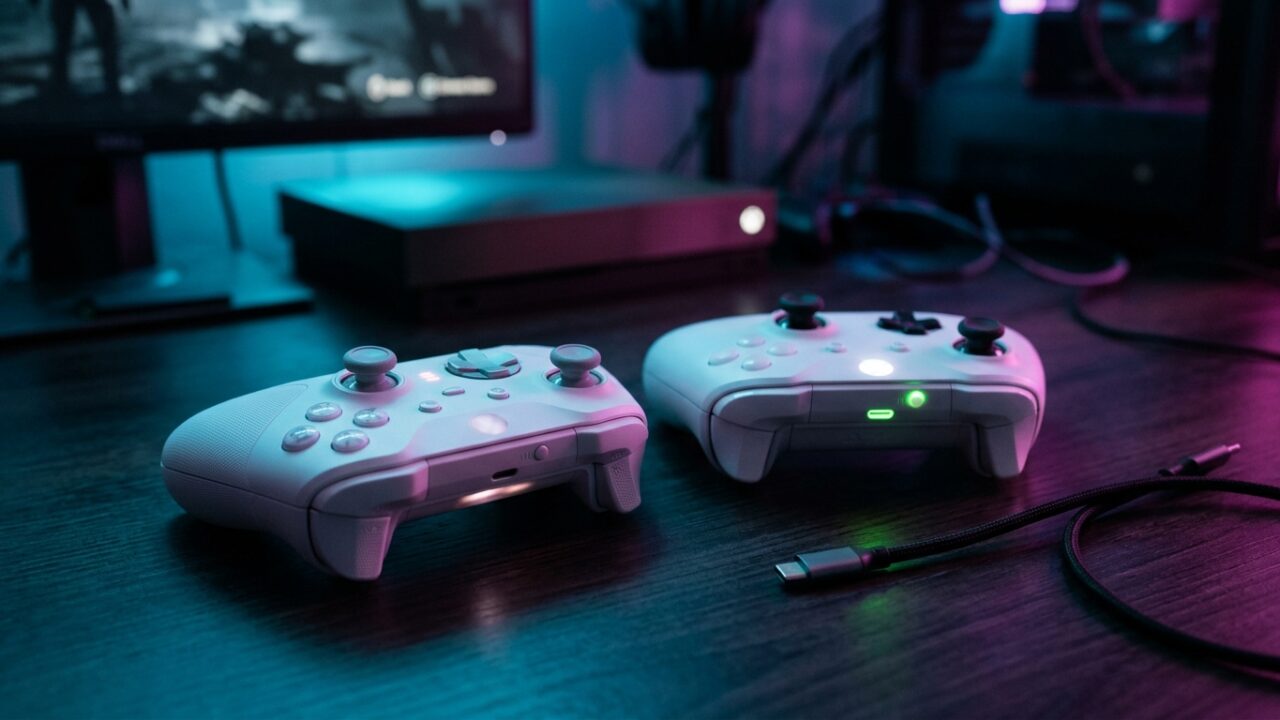
Grand Theft Auto 6 can leave a PS5 controller needing a recharge sooner than expected. Game Informer reports around 4 hours 30 minutes of play from a fully charged standard DualSense, compared with about 3 hours 40 minutes for the DualSense Edge in its testing and collected reports.
The report links the shorter sessions to GTA 6’s extensive use of the controller’s hardware, including haptic feedback, adaptive triggers and the built-in speaker. That explanation fits the documented design of the PS5 version, although the reported figures are test results rather than an official battery-life rating from Sony or Rockstar.
What the numbers mean for players
The like-for-like difference in Game Informer’s figures is 50 minutes per charge: 270 minutes for the standard DualSense minus 220 minutes for the DualSense Edge. Put another way, the Edge figure represents about 81.5% of the standard controller’s reported runtime, or an 18.5% shorter session. These calculations use Game Informer’s two reported averages and do not establish a universal result for every controller, battery age or play style.
Sony’s published hardware data provides useful context. The standard DualSense is listed with a 1,560 mAh battery, while the DualSense Edge manual lists 1,050 mAh. That is a 510 mAh difference, meaning the Edge’s documented battery capacity is approximately 32.7% lower than the standard model’s: (1,560 − 1,050) ÷ 1,560 × 100. Battery capacity alone cannot predict runtime because the controllers have different hardware and usage conditions, but it establishes a clear baseline behind the Edge’s shorter result.
Why GTA 6 can use more power
The official PlayStation Store listing confirms vibration and trigger-effect support for GTA 6 and also identifies the game as playable without controller vibration or adaptive-trigger effects. Rockstar’s accessibility documentation lists adjustable vibration and haptics strength, plus separate adaptive-trigger resistance and vibration adjustments for DualSense controllers.
Independent hands-on coverage gives more detail about how often those features are involved. PC Gamer highlighted a resistance point on the accelerator that creates a slower cruising feel before the trigger is pulled further for full speed. GameSpot also described the controller speaker handling details such as phone rings and police-scanner chatter, while noting that the triggers are used across driving and other activities.
For players who want longer wireless sessions, the practical choice is to lower vibration and haptics strength and disable adaptive-trigger resistance or vibration in the controller settings. A USB-C cable remains the straightforward option when keeping GTA 6’s full feedback package matters more than wireless play time.
Discuss in the forum
What do you think about this story? Start the discussion in our forum.
Discuss in the forum →